Through our past initiatives, the Nation Forum of Women with Disabilities (NFWD) has worked to empower women and girls with disabilities across Sri Lanka. Each project reflects our commitment to inclusion, equality, and creating opportunities for meaningful participation in society.
1. Freedom House Funded Project (AIGSL): Improving the Literacy on Sexual and Reproductive Health (SRH) and Political Rights for Women with Disabilities
Duration: February – April 2024
Location: Puttlam District, Sri Lanka
Budget: LKR 692,591/-
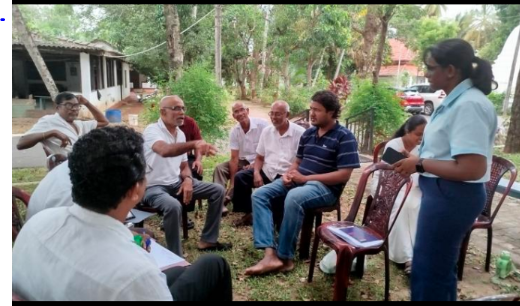
This project aimed to improve the understanding of women with disabilities on sexual and reproductive health rights (SRHR) and political participation. Four workshops were conducted across Puttlam and surrounding areas, reaching 80 women with various disabilities. Participants reported increased knowledge of SRHR, confidence in exercising their rights, and greater interest in civic engagement. Accessible training materials were developed for future awareness programs, and each participant received a dignity kit supported by UNFPA.
2. Freedom House Funded Project (AIGSL): Improving the Literacy on Sexual and Reproductive Health (SRH) and Political Rights for Women with Hearing Impairments
Duration: June – August 2024
Location: Matara District, Sri Lanka
Budget: LKR 715,677.25/-
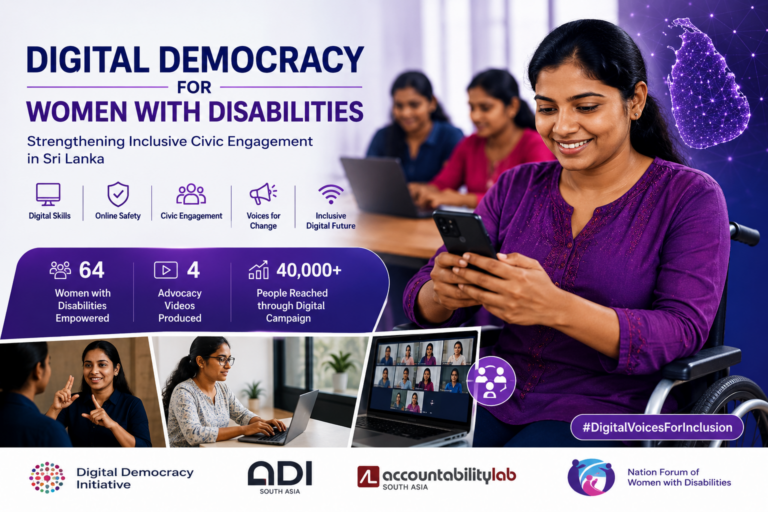
This initiative targeted women with hearing impairments, providing training on SRHR and political literacy through Sri Lankan Sign Language. Sixty women participated in interactive sessions that enhanced their understanding of reproductive rights and active citizenship. Sign-language-based video materials were produced for continued community awareness. The project also strengthened NFWD’s collaboration with the Deaf Women’s network in Matara District, fostering inclusion and peer learning.
3. Freedom House Funded Project (AIGSL): Improving Literacy on Political Rights and New Electoral Systems
Duration: August 2024 – September 2024
Location: Colombo and Gampaha Districts, Sri Lanka
Budget: LKR 999,500/-
This project enhanced awareness of electoral reforms and political participation among women with disabilities. Two workshops were held for 45 participants, who gained practical knowledge of the new electoral system and their voting rights. Easy-to-read educational guides were distributed, and an accessible-format Women’s Manifesto was created to support advocacy and inclusion in political processes.
4. Women and Media Collective (WMC) Funded Project:UNPAID CARE WORK IN SRI LANKA – THE CARE PROJECT (Ongoing)
Duration: Two years (Started from August 2024)
Location: Pirivena Grama Niladhari Division, Colombo District Sri Lanka
This joint initiative with the Women and Media Collective focuses on recognizing, redistributing, and reducing unpaid care work, particularly the disproportionate burden faced by women and mothers of children with disabilities. Activities included a Time Use Survey across 36 households, a Care Center Assessment Survey mapping accessibility to care facilities, and two in-depth case studies documenting the emotional and economic impact of unpaid care. Five community awareness meetings engaged 100 participants, highlighting the social value of unpaid care and the need for systemic support. The project generated gender-disaggregated data to inform national advocacy and deepened partnerships for policy dialogue on care economy reforms.
5. Partnership with The Asia Foundation (TAF): Addressing Unpaid Care in Sri Lanka – Establishment of Day Care Center for Independent Living (Present Project)
Duration: April 2025 – April 2027 (Two Years)
Location: Colombo District, Sri Lanka
Objective: To recognize, reduce, and redistribute unpaid care work through the establishment of a model Day Care Center for Independent Living.
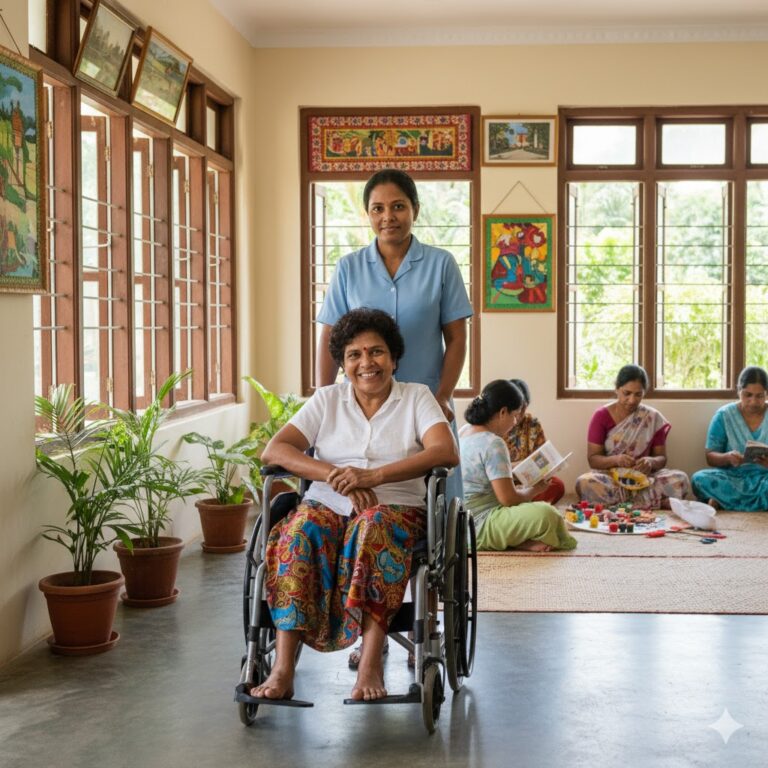
The center provides specialized care and skills training for women with disabilities and their caregivers, particularly those from low- and middle-income families. Current activities include caregiver training, respite care services, and awareness sessions on shared caregiving responsibilities. Approximately 50 women, including mothers of children with disabilities, directly benefit from this initiative.